Radical ⾡ (162)
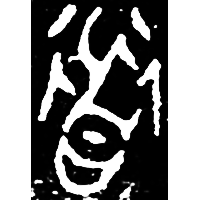
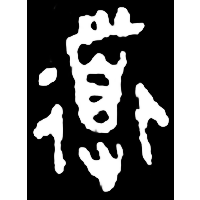
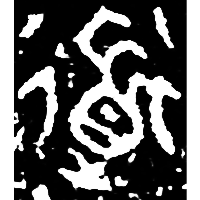
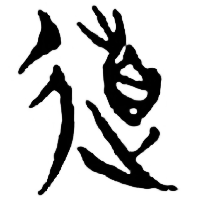
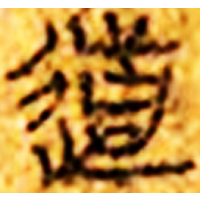
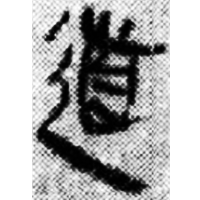
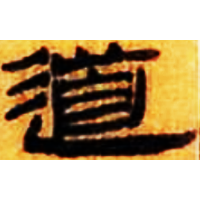

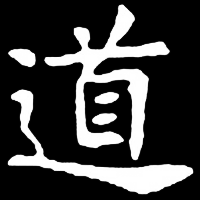
遠 (U+9060)
𰻝 (U+30EDD)
Shortening of 𰻞 by analogy with 馬 > 马 and 長 > 长.
𰻞 (U+30EDE)
| Qing | Qing | PRC | PRC |
|---|---|---|---|
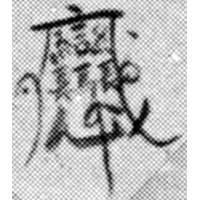 | 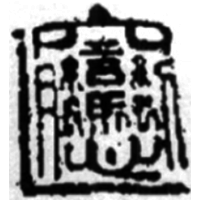 | 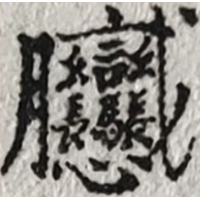 | 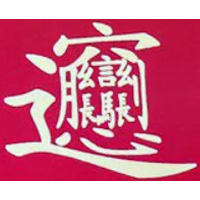 |
| 洪門會場陳設圖 | (Unknown) | 宋友權 《時空成霰媒體職場隨想錄》 | Toa Payoh 2023 |
{兵} bīng “soldier” ♪→ {𰻞(𰻞麵)} biáng(biáng miàn) “biangbiang noodles”
From a Hongmen society secret Taoist talisman-like symbol composed of 戀 “to long for”, 汨 “Ming dynasty”, 戈 “spear; weapon”, 馬 “people” (southeastern secret societies slang) and two 長 “long”, conveying meanings “to long for the Ming” and “strong weapons and sturdy horses/people, long-devoted members of the organization”. Later 穴 (comes either from 共 < 洪 as in 洪門 “Hongmen” or from distorted 雨 “rain” from typical Taoist characters or talismans) was added and 戈 was changed to a synonymoys 刀 “knife”. This and many other related characters were used for many different words; the usage of these characters for {𰻞(𰻞麵)} is based on one of their usages for {兵}.
- 王謝楊 2023 - 是biang,是shuar,還是賊?——談源於清代洪門祕符的複雜漢字
Forms:
𰻞 - Shortening by analogy with 馬 > 马 and 長 > 长.