Radical ⾋ (140)
草 (U+8349)
薩 (U+85A9)
| E.Han | Nanbei (N.Wei) | Nanbei (E.Wei) | Tang | Jin | Ming | Qing | Qing |
|---|---|---|---|---|---|---|---|
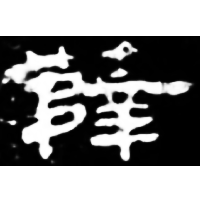 | 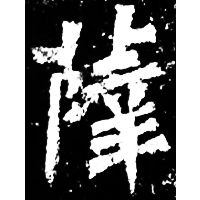 | 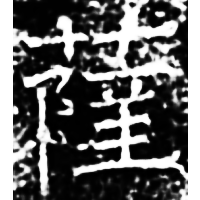 | 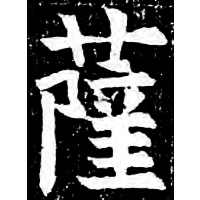 | 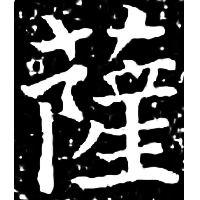 | 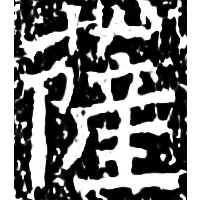 | 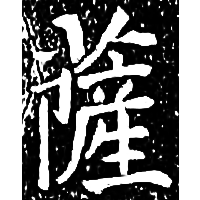 | 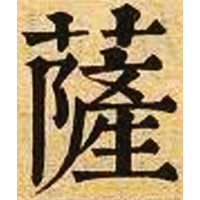 |
| 孔宙碑 [薛] | 南0060X [薛] | 南0445A | 唐1303A | 宋0400X | 明0134X | 清0015B | 內本康熙 |
{(菩)薩} (bu)sat “bodhisattva”
Assimilated form of 薛 from 薛埵 *siat.tuɑjᴮ “sattva” via adding 土 from 埵 to the bottom right. The appearence of 生 “to live” (> 產) in the bottom right part is probably influenced by Sanskrit sat “existing; living”.
- 岩松浅夫 1991 - 「薩」字の成立とその變遷
- 張涌泉 2010 - 漢語俗字研究 [2nd ed.] (180)